Buying stock
What should you check when buying back a watch or piece of jewellery?
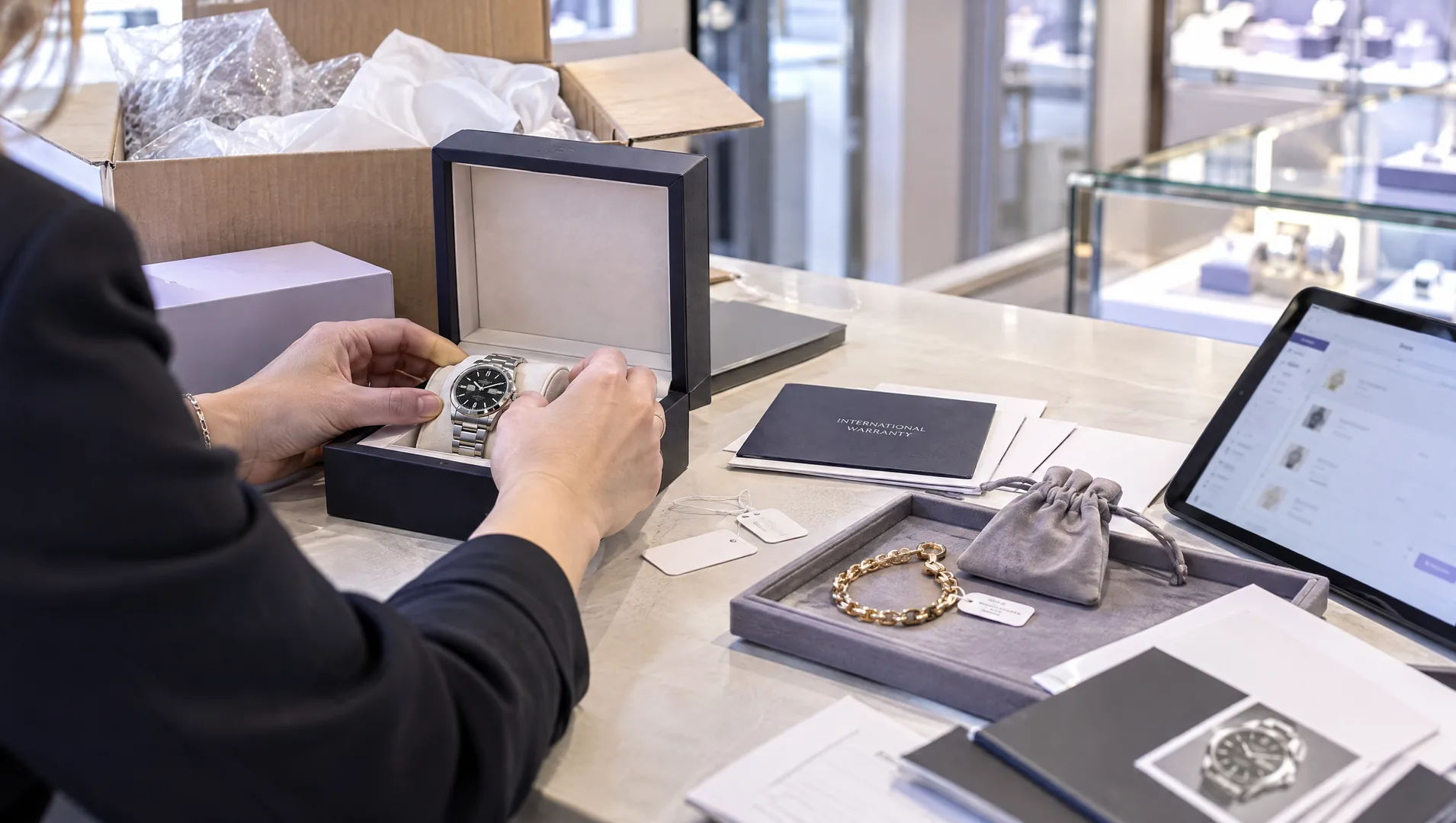
Find the original sale, check the piece as it is today and record the new buying agreement. Previous records are useful evidence, but the current condition, accessories and price need a fresh check.
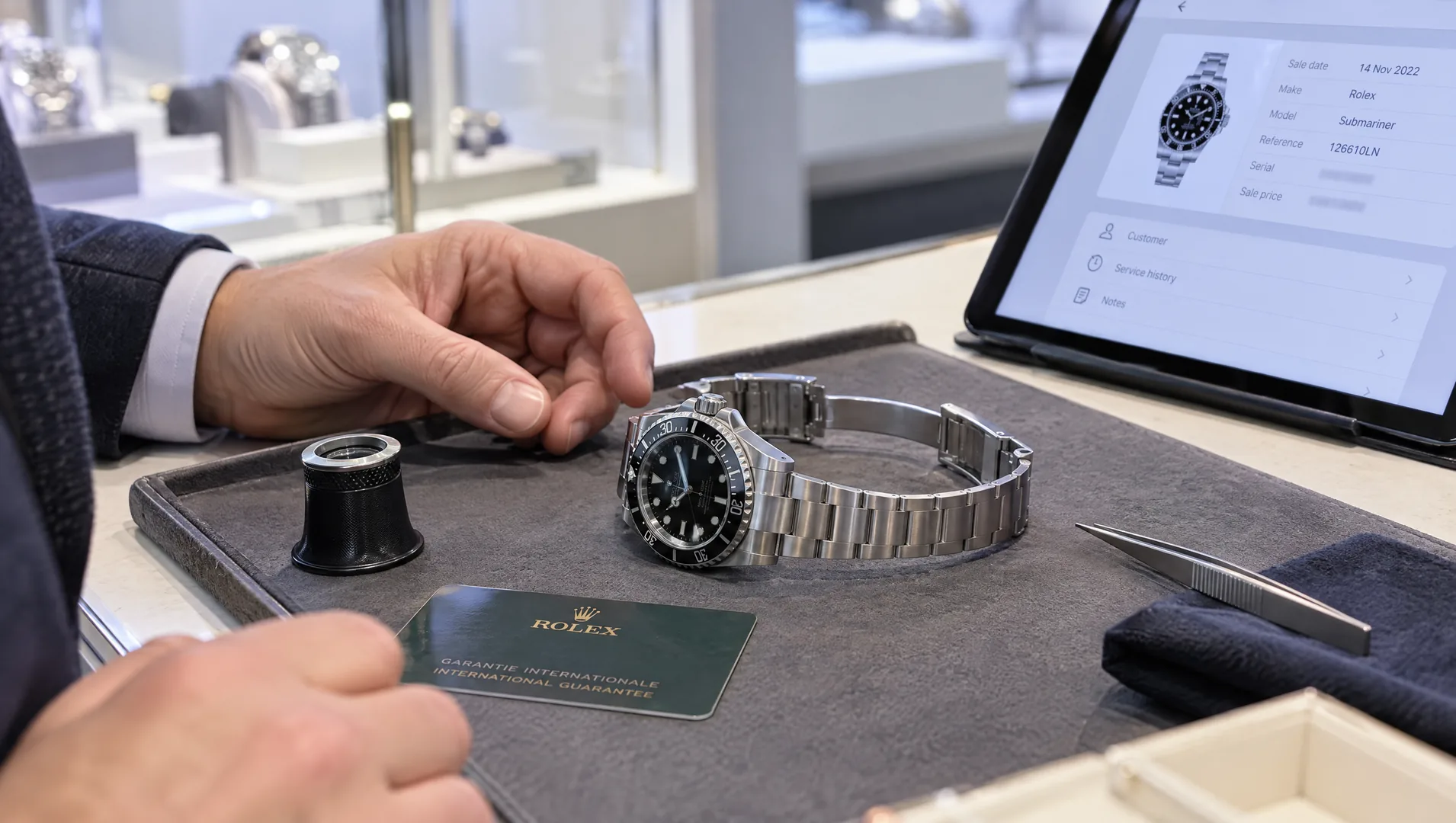
A customer brings back a watch your shop sold last year and asks whether you would buy it. You already know something about the piece. That is a helpful starting point, not a reason to skip the checks you would make on another purchase.
Use the history to ask better questions
Find the and compare its identifying information with the watch presented. Check what accompanied the earlier sale and what has returned now. Ask about work carried out since then and record what can be confirmed.
Decide what kind of transaction is being discussed before agreeing an amount. A new buyback is different from dealing with a return or a complaint. If the customer is raising a problem with the earlier sale, follow your appropriate returns process rather than treating everything as another purchase.
- Match the piece to the original stock and sale records.
- Inspect its current condition.
- Check accessories and paperwork received this time.
- Clarify the customer's request before agreeing the transaction.
The old selling price can inform the conversation, but it does not set today's buying price. Current condition, demand, preparation costs and your existing stock position all belong in the decision.
See it in Stockbox
The buyback recording starts from an existing order, enters a new amount and payment details, retains the serial reference and saves the purchase. Notice that the new amount need not match the original sale.
Give the new purchase its own agreement
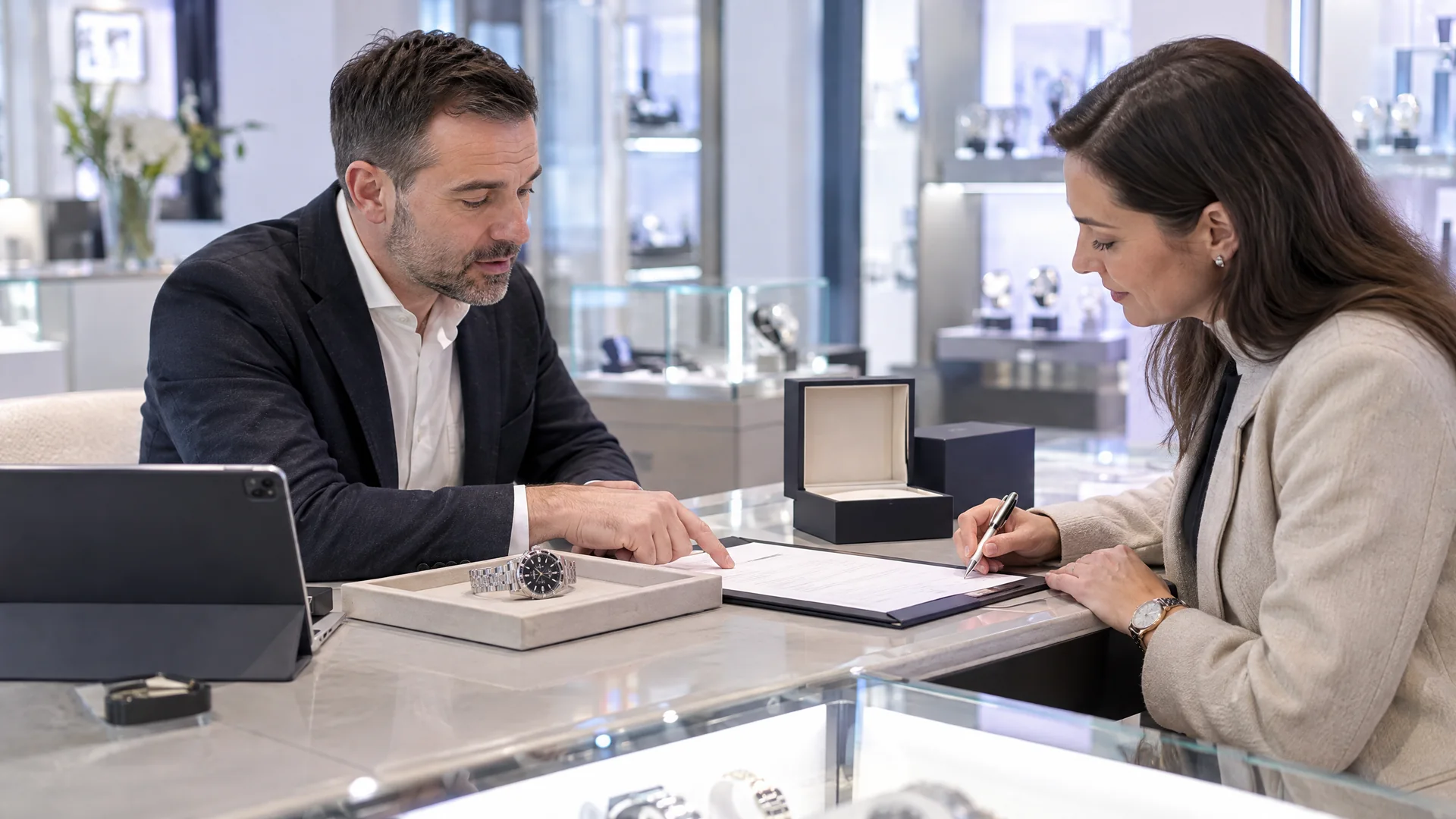
Use the to capture what has been agreed now. Keep the new amount and payment method clear. Apply your shop's normal checking process to accounting selections instead of assuming they must be identical to the earlier transaction.
For example, a watch may have been sold with a full set of accessories but returned without its box. The new record and eventual listing should describe what is available now. Copying the old description could otherwise promise a buyer something your shop no longer holds.
Plan any preparation before deciding when to list it. A familiar piece can still need servicing, cleaning or new photographs. Give the work an owner and keep estimates separate from confirmed costs when assessing the purchase.
Before putting it back on sale
- Check the new purchase agreement and payment record.
- Update condition and accessories against the physical piece.
- Complete any agreed inspection or preparation.
- Review the description and asking price for today's stock.
A linked history saves your team from starting with a blank page. A fresh assessment prevents that history becoming a substitute for judgement. Both matter when a customer trusts your shop to handle a piece for a second time.