Repairs & service
What information should you record for a jewellery or watch valuation?
Identify the exact item, agree the valuation’s purpose and record the evidence behind the description. The value comes from qualified judgement; the record helps your team explain what was assessed and when.
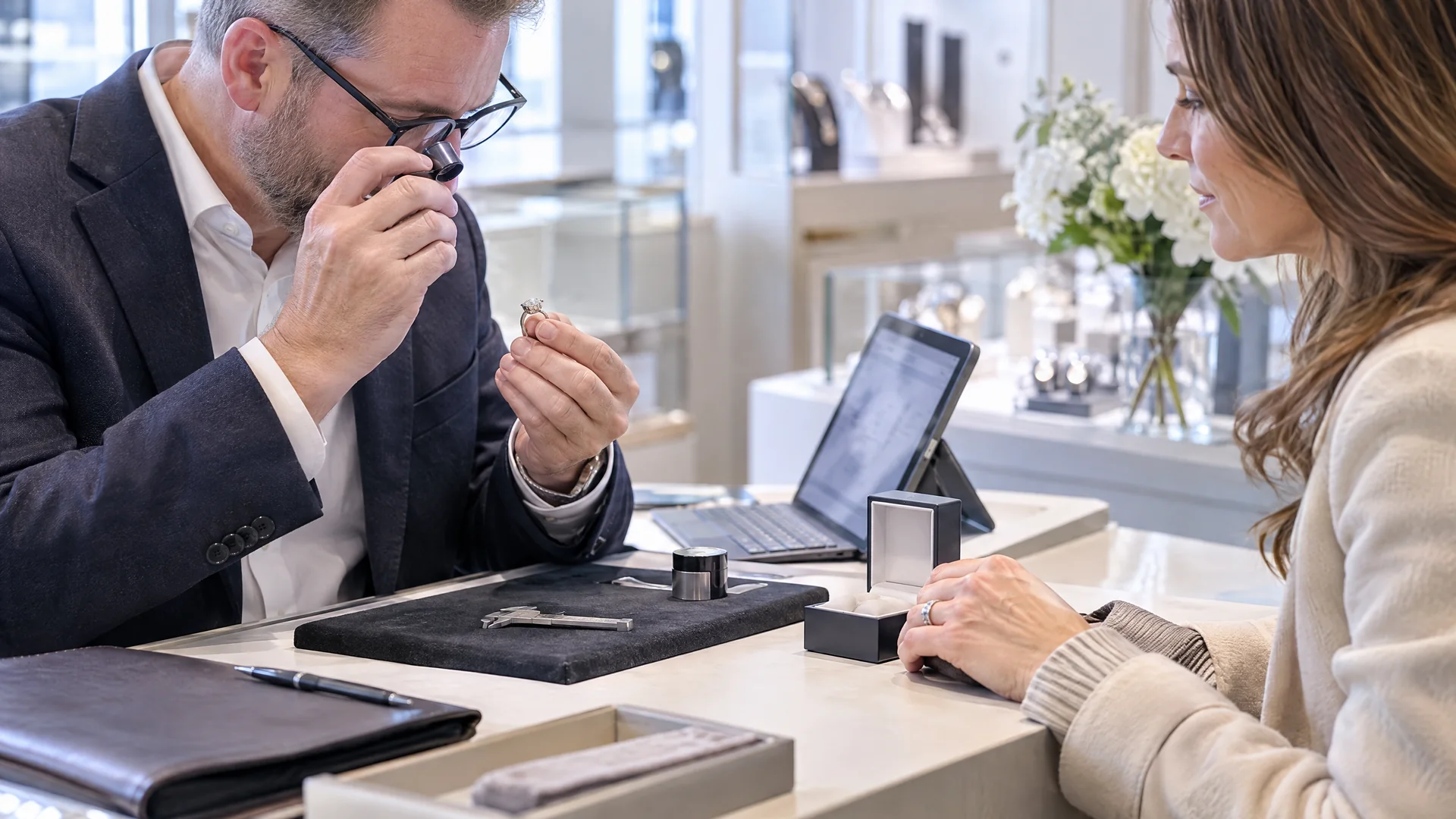
A customer brings in a watch and asks, “What is it worth?” Before quoting a figure, establish what they need the valuation for. An insurance enquiry, a possible sale and an estate matter can require different instructions and expertise. Do not assume a single number answers every question.
Agree the scope before writing the document
Explain who will assess the piece, what the service includes and whether specialist checks are needed. If the request is outside your expertise, arrange the appropriate help. A polished document should reflect the assessment actually carried out, without suggesting checks you have not performed.
Start a with the customer and a precise item description. Include the identifying details you can verify, the condition observed and any accompanying documents. Distinguish a customer’s account of the item from facts your shop has checked.
- Record the purpose and instructions agreed with the customer.
- Identify the piece using relevant dimensions, marks or references.
- Describe the condition and any limits to the inspection.
- List accompanying papers and accessories accurately.
Photographs can show the assessed item and visible details, but they do not prove authenticity or condition beyond what they show. Use them alongside careful written notes. A colleague should be able to match the document to the piece without relying on memory.
See it in Stockbox
The walkthrough creates a valuation with item details, photographs, attributes, a valuation type and amount. Notice the option to show the date on the PDF.
Check the wording before the customer receives it
A should be reviewed as a customer document. Make sure the item, value, purpose and date agree with the assessment. A previous order may provide useful identifying information, but the condition or relevant circumstances may have changed since the sale.
For example, a customer returning with a previously sold watch may now have different accessories or a replacement bracelet. Reusing the old description without checking the piece can turn a convenient starting point into an inaccurate record.
Keep the person responsible for the assessment identifiable through your working process. If the customer later asks why a detail was included, your team should know who can answer. Agree how amended documents are recorded so that an earlier version is not accidentally handed out again.
Before issuing a valuation
- Check the description against the actual item and photographs.
- Confirm that the stated purpose matches the customer’s request.
- Check the date and any limitations or assumptions.
- Have the appropriate person approve the completed document.
The aim is an understandable record of a considered assessment. Software can organise the information and produce the document; it does not replace the expertise or responsibility behind the valuation.